Why a Porcelain Patio Is the Smartest Choice for UK Gardens
A porcelain patio combines the best of both worlds: the natural beauty of stone with the performance of modern engineering. Unlike traditional paving materials that stain, fade, and demand constant upkeep, outdoor porcelain delivers a flawless finish that stays looking new for decades with almost no effort on your part. For UK homeowners weighing up their options, porcelain patios have become the clear frontrunner, and once you understand why, the choice is straightforward.
This guide walks you through everything that goes into a porcelain patio installation: the materials, the design choices, the critical role of the subframe, and what a professional installation actually looks like from start to finish. Whether you are planning a compact seating area or a full garden redesign, understanding these fundamentals will help you make confident decisions.
What Makes a Porcelain Patio Different from Traditional Paving?
Porcelain patio tiles are manufactured from refined clay and minerals, fired at temperatures exceeding 1,200 degrees Celsius. This vitrification process creates a material that is fundamentally different from natural stone or concrete in three important ways:
Water absorption: Outdoor porcelain absorbs less than 0.5% of its weight in water. Natural stone absorbs anywhere from 2% to 15%. This matters because absorbed water freezes in winter, expands, and cracks the surface from within. Porcelain is frost-proof by design: there is no water inside to freeze.
Stain resistance: Because porcelain is non-porous, spills sit on the surface rather than soaking in. Red wine, barbecue grease, fallen leaves: all wipe clean without leaving a trace. Natural stone, even when sealed, will eventually stain if spills are not cleaned immediately.
Colour stability: The colour in a porcelain tile runs through the full thickness of the material. It does not fade in UV light, it does not weather to a different shade, and it does not develop the patchy appearance that affects many natural stones after a few British summers.
These three properties mean a porcelain patio is genuinely maintenance-free in a way that traditional paving can never be, regardless of how diligently you seal and maintain it.
Porcelain Patio Design: Finishes, Sizes, and Layout
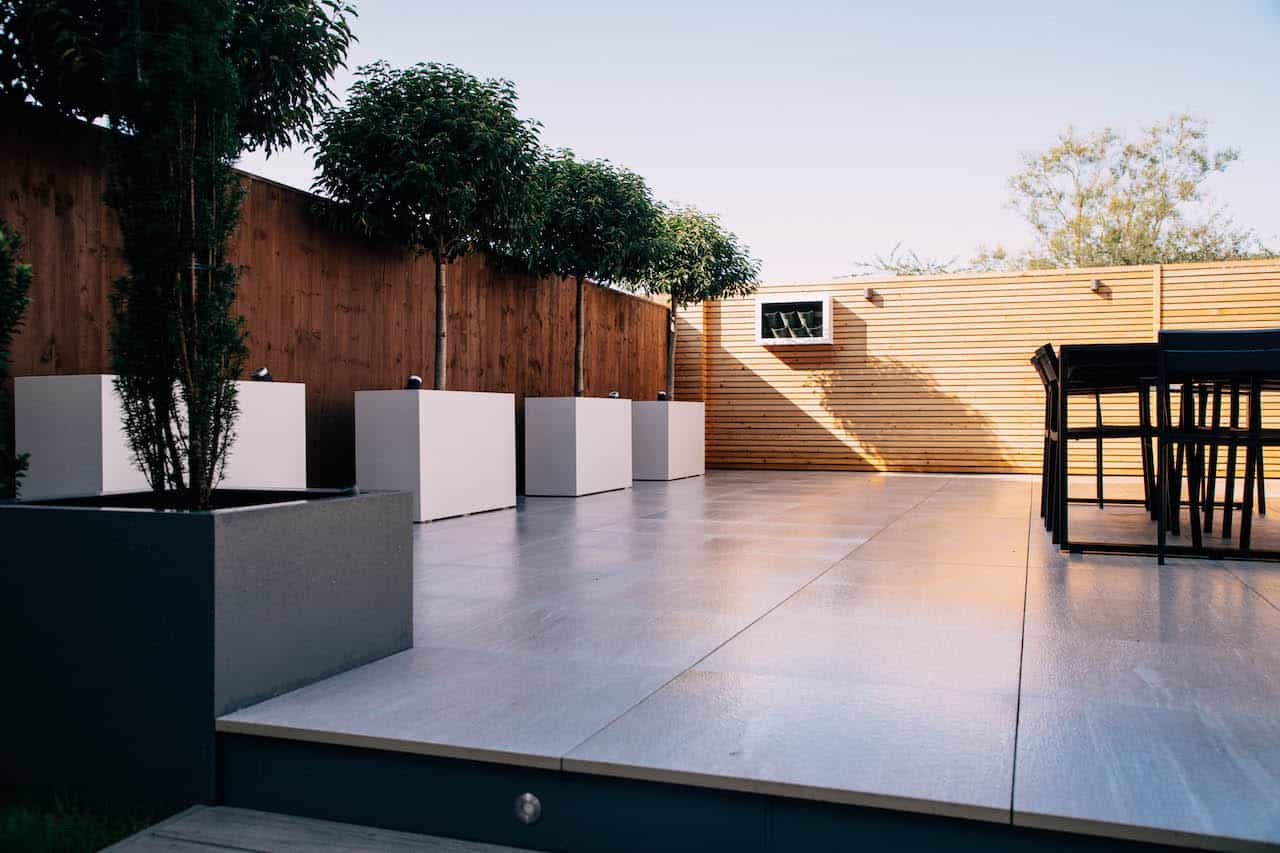
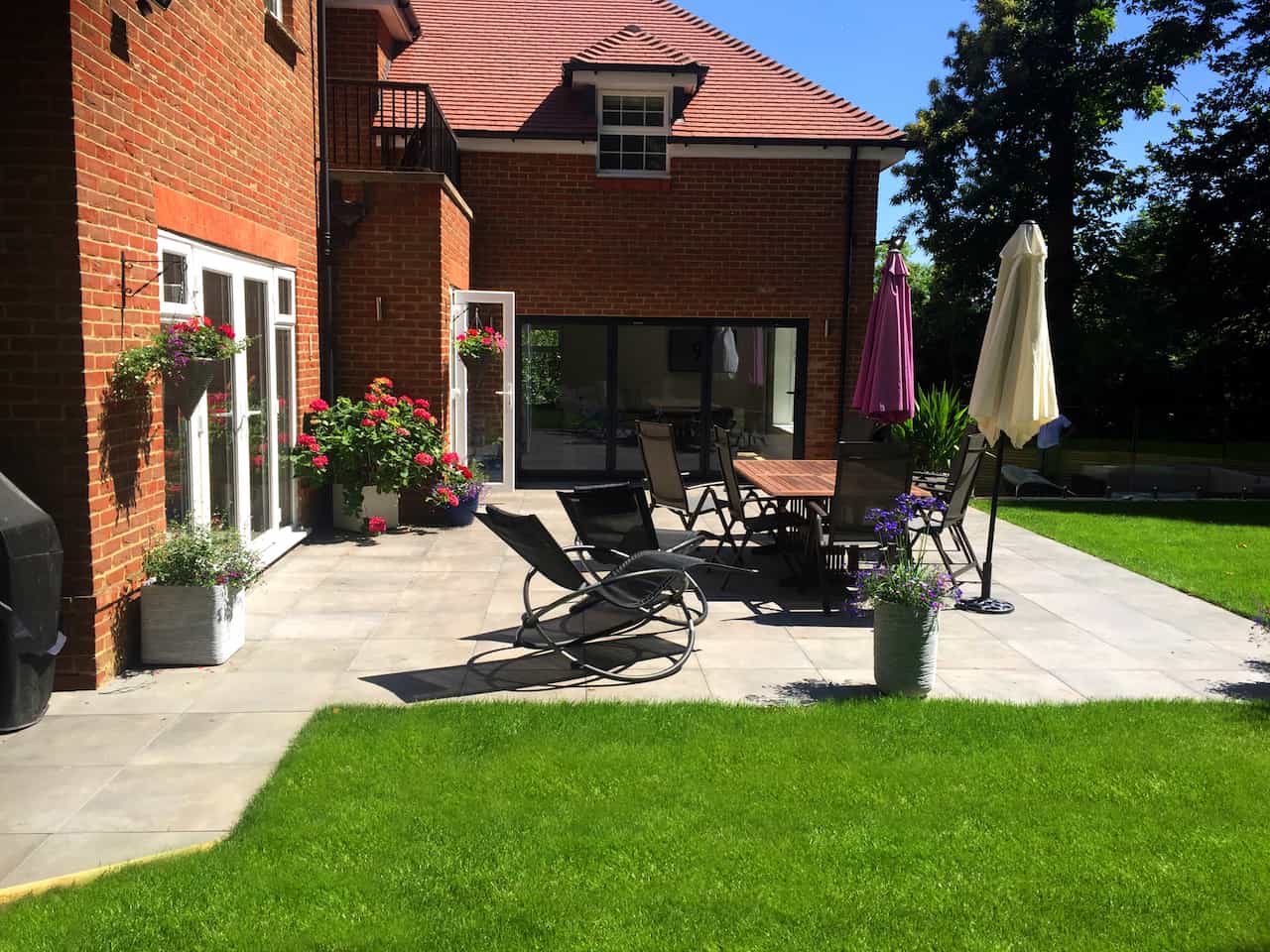
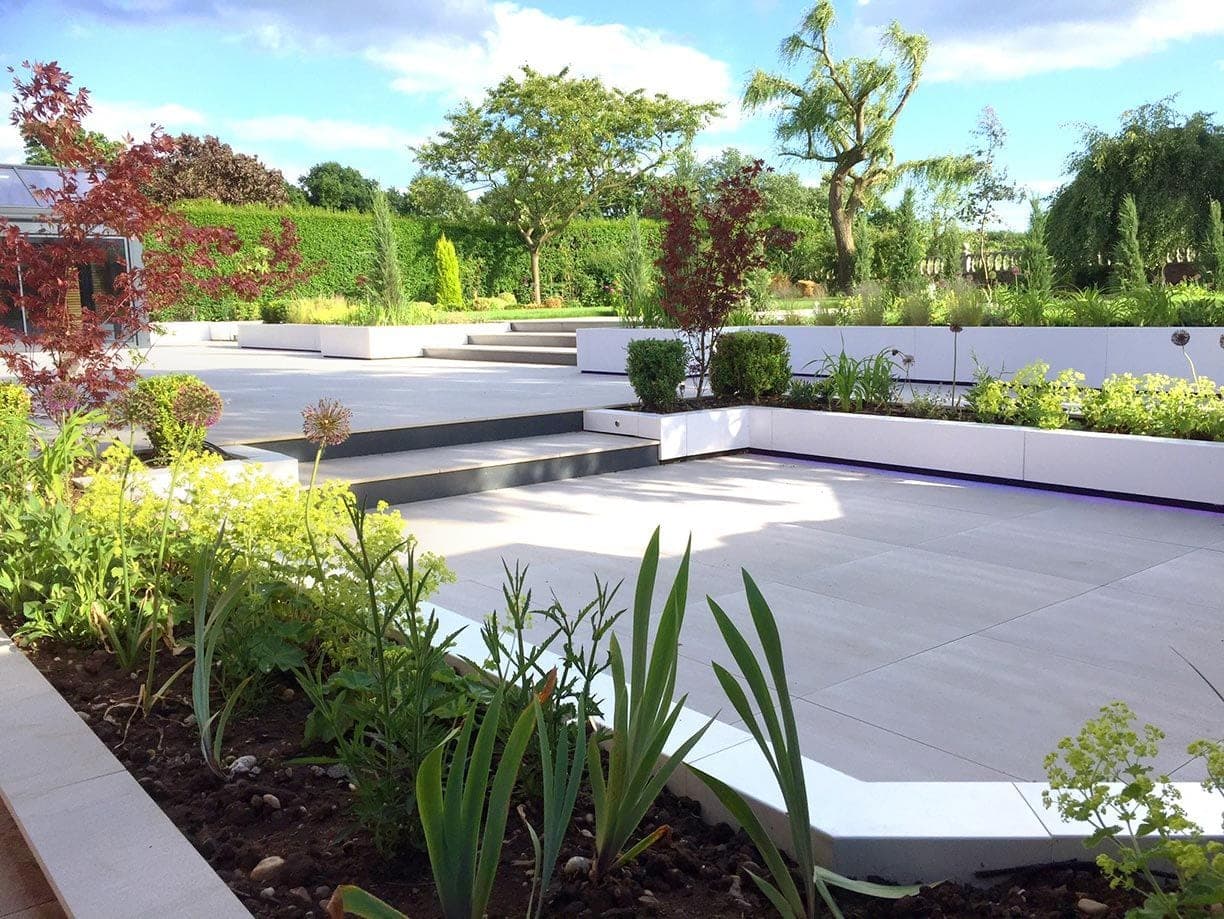
Modern outdoor porcelain offers a range of finishes and formats to suit any architectural style. The design phase is where your patio personality takes shape, and understanding your options ensures your finished space reflects your taste.
Surface finishes for outdoor porcelain
- Natural stone effect: Replicates the look of limestone, sandstone, or slate with remarkable accuracy. The textured surface provides R11 slip resistance, making it safe in all weather conditions.
- Wood effect: Captures the warmth of timber grain without the maintenance. Ideal for homeowners who love the look of wood decking but want porcelain durability.
- Concrete effect: A contemporary, industrial look that suits modern architecture and minimalist garden designs.
- Marbled and polished effect: For a premium, high-end finish that elevates the entire garden.
Tile sizes and laying patterns
Standard outdoor porcelain tiles are 20mm thick, with face sizes typically ranging from 600x600mm to 1200x600mm. Larger format tiles (900x600mm and above) create a more contemporary, less cluttered look with fewer joint lines. Popular laying patterns include:
- Linear bond: Tiles laid in straight rows, aligned. Clean and modern.
- Stretcher bond: Offset by half a tile width, like brickwork. Classic and versatile.
- Herringbone: Tiles laid at 45-degree angles for a striking, traditional look.
- Mixed format: Using multiple tile sizes in a randomised pattern for a natural stone appearance.
iGarden Vision supplies and installs 20mm outdoor porcelain tiles from leading manufacturers, all carrying R11 slip resistance ratings as standard. Our team can advise on the best tile, finish, and laying pattern for your specific garden and architectural style.
The Subframe: Why What Is Underneath Matters Most
The single biggest factor determining the long-term performance of a porcelain patio is not the tiles themselves but the foundation underneath. Traditional patio installation methods involve excavation, a compacted hardcore sub-base, a mortar bed, and then the tiles. This process is slow, messy, and introduces several failure points: subsidence from poorly compacted ground, cracking from freeze-thaw cycles in the mortar, and DPC breaches where the patio sits too high against the house wall.
A better approach exists. The iFrame galvanised steel subframe system eliminates every one of these traditional failure points by replacing the entire below-ground process with an engineered, above-ground support structure.
How the iFrame system works for porcelain patios
Instead of digging, carting away spoil, and pouring concrete, the iFrame sits on adjustable steel pedestals directly on your existing ground. Each pedestal is independently adjustable, meaning the frame is precisely levelled regardless of how uneven the underlying surface is. The porcelain tiles are then fixed directly to this steel frame.
The result is a perfectly flat patio surface that:
- Installs in days rather than weeks, with no excavation, no skip hire, and no wet trades
- Works over any ground condition: slopes, TPO-protected zones, existing concrete, compacted earth
- Sits 150mm below the damp proof course by design, protecting your home from moisture ingress
- Is fully demountable and relocatable: a non-permanent structure that does not require planning permission
- Lasts 50-plus years with zero structural maintenance: galvanised steel does not rot, warp, or degrade
The iFrame is the foundation of every porcelain patio we install. Our iGarden difference page explains the full system in detail.
What a Professional Porcelain Patio Installation Looks Like
If you are considering a porcelain patio for your garden, here is what to expect from a professional installation with iGarden Vision:
- Step 1: Design consultation. We visit your garden, discuss your vision, take precise measurements, and complete a point cloud laser survey to capture every millimetre of your space in 3D. This data ensures your patio design is accurate to within 2mm.
- Step 2: Frame fabrication. Your iFrame is manufactured to the exact dimensions of your garden at our UK facility. No cutting on site, no material waste.
- Step 3: Installation. Our installation team arrives, clears the area, positions the adjustable pedestals, and assembles the steel frame. The frame is levelled and the porcelain tiles are fixed. A typical residential patio completes within one to two weeks.
- Step 4: Handover. Your patio is ready to use immediately. There is no curing time because there is no concrete or mortar involved.
For a detailed walkthrough, see our full installation process.
Porcelain Patio vs Other Outdoor Surfaces
How does a porcelain patio compare to the alternatives? Here is a straightforward breakdown:
Porcelain patio vs natural stone patio: Porcelain does not stain, does not need sealing, and does not fade. Natural stone requires annual sealing and cleaning to maintain its appearance. Porcelain also offers consistent colour and slip resistance across every tile, whereas natural stone varies batch to batch. Over ten years, the maintenance cost and effort of a natural stone patio far exceeds the initial price difference.
Porcelain patio vs composite decking: Composite decking offers a warm, wood-like appearance and requires less maintenance than timber. However, porcelain delivers a premium, architectural finish that many homeowners prefer for entertaining areas. The two materials pair beautifully: porcelain for the main patio area and composite decking for raised sections or seating zones.
Porcelain patio vs concrete paving: Concrete paving is the budget option, and it shows. It fades unevenly, stains readily, and develops a weathered, tired appearance within a few years. Porcelain costs more upfront but looks better for far longer, with zero ongoing cost for sealers, cleaners, or repairs.
Porcelain Patio Maintenance: What You Actually Need to Do
One of the strongest selling points of a porcelain patio is how little you need to do to keep it looking its best. Here is the complete maintenance routine:
- Weekly: Sweep with a stiff brush to remove leaves and debris. This takes minutes.
- Monthly: Wash down with warm water and a pH-neutral cleaner if needed. A garden hose or light pressure washer does the job.
- Annually: Nothing required. No sealing, no treating, no replacing. Porcelain does not deteriorate with weather exposure.
Compare this to natural stone, which requires annual sealing, periodic algae treatment, and eventual replacement of cracked or spalled slabs. Compare it to timber decking, which needs annual oiling or staining, board replacement every few years, and full frame replacement within 10 to 15 years. A porcelain patio on an iFrame steel subframe is, in practical terms, a fit-and-forget solution. For a full comparison of maintenance schedules, see our guide on porcelain vs traditional paving maintenance.
Is a Porcelain Patio Right for Your Garden?
A professionally installed porcelain patio is an excellent choice if you:
- Want a genuinely low-maintenance outdoor surface that keeps its colour, grip, and finish for decades
- Prefer a clean, contemporary look that complements modern architecture
- Have challenging ground conditions: slopes, uneven surfaces, or TPO restrictions that rule out traditional excavation
- Are replacing an old patio or decking and want a permanent upgrade rather than another short-term fix
- Value the assurance of a professional installation with a steel subframe engineered for 50-plus years
Every garden is different, and the best way to find out if a porcelain patio is right for your space is to speak with our team. We offer free, no-obligation consultations and quotes. Call us on 0333 577 1553 or get your free quote online in under two minutes.